

Coenzyme Q10 is a substance necessary for the functioning of virtually every cell in the human body. It is also referred to as ubiquinone — or, in its reduced active form, ubiquinol — though these terms appear more in clinical and scientific contexts than in everyday conversation. What makes CoQ10 remarkable is that it is both produced by the body and obtained from diet, yet its endogenous production declines steadily with age — and is significantly depleted by one of the most commonly prescribed classes of medication in the world. Understanding what CoQ10 does, what depletes it, and when supplementation makes sense is worth the time for a broad range of people.
What Is Coenzyme Q10 and How Does It Work?
Coenzyme Q10 is a fat-soluble, vitamin-like compound found in virtually all cells of the body — particularly in high concentrations in tissues with the greatest energy demands: the heart, liver, kidneys, and skeletal muscle. Its primary function is in the mitochondrial electron transport chain — the biochemical process through which cells convert nutrients into ATP, the universal cellular energy currency. Without CoQ10, this process cannot proceed efficiently. In practical terms: CoQ10 is essential to cellular energy production.
Alongside this bioenergetic role, CoQ10 is one of the body's most important fat-soluble antioxidants. In its reduced form (ubiquinol), it neutralises free radicals in cell membranes and circulating lipoproteins, protecting cells — including those lining blood vessel walls — from oxidative damage. It also regenerates other antioxidants, particularly vitamin E, extending their protective effect. Both functions — energy production and antioxidant protection — are relevant to understanding why CoQ10 deficiency has the consequences it does. Browse our dedicated CoQ10 supplements collection for a comprehensive range.
Natural Decline and Statin Depletion
The body synthesises CoQ10 endogenously, but production declines progressively from early adulthood. Levels in cardiac tissue in a 40-year-old are measurably lower than in a 20-year-old, and by age 60–70 the decline is clinically significant. This age-related reduction correlates with increased oxidative stress and reduced cellular energy efficiency — making CoQ10 a relevant consideration in middle and older age even without other risk factors.
Equally important is the impact of statin medications (HMG-CoA reductase inhibitors), prescribed to lower cholesterol. Statins block the same biochemical pathway that produces both cholesterol and CoQ10. Studies consistently show that statin therapy reduces circulating CoQ10 levels, and many clinicians consider CoQ10 supplementation a reasonable adjunct for people on long-term statin therapy — particularly those experiencing statin-associated muscle symptoms (myalgia), which are one of the most common side effects of this medication class. If you take statins and experience muscle discomfort or fatigue, discussing CoQ10 with your doctor is worthwhile.
Cardiovascular Health
CoQ10's concentration is highest in the heart, and this is where research interest has been most consistent. The heart requires enormous and continuous ATP supply — it never rests — and its dependence on mitochondrial function makes it particularly sensitive to CoQ10 status. Research has investigated CoQ10 supplementation in the context of heart failure, where mitochondrial dysfunction is a core part of the disease process. A large multicentre randomised controlled trial (the Q-SYMBIO trial) demonstrated that CoQ10 supplementation significantly reduced major cardiovascular events and cardiovascular mortality in patients with moderate-to-severe heart failure compared to placebo.
CoQ10's antioxidant role in blood vessel walls is also relevant to cardiovascular health: it helps protect LDL cholesterol particles from oxidation, which is a key step in the development of atherosclerotic plaques. Our cardiovascular supplements collection includes CoQ10 alongside other evidence-based options for heart health.
Signs of Coenzyme Q10 Deficiency
Because CoQ10 is involved in cellular energy production across all tissues, its depletion produces broadly distributed effects. Common indicators of low CoQ10 status include:
- Persistent fatigue — disproportionate tiredness that does not respond well to rest, reflecting reduced ATP production capacity
- Reduced physical stamina — faster onset of fatigue during exercise; slower recovery
- Muscle weakness or aching — particularly relevant in people taking statins
- Reduced immune resilience — more frequent or prolonged infections
- Cognitive slowing — difficulty concentrating, mental fogginess
- Cardiovascular symptoms — in more pronounced deficiency, reduced exercise tolerance and heart palpitations
These symptoms are non-specific and overlap with many other conditions, but their cluster — particularly in people over 50, those on statins, or those with cardiovascular conditions — makes CoQ10 status worth evaluating.
Dietary Sources of CoQ10
CoQ10 is found in a range of foods, though dietary intake alone is unlikely to significantly raise plasma levels — most people obtain approximately 3–5 mg/day from diet, far below supplemental doses:
- Organ meats — heart, kidney, and liver are the richest sources; beef heart contains the highest concentration of any food
- Fatty fish — sardines, mackerel, and salmon provide meaningful amounts
- Muscle meat — beef and pork contain moderate levels
- Vegetable sources — spinach, broccoli, cauliflower, and whole grains contribute smaller amounts
- Nuts and seeds — peanuts and sesame seeds contain modest amounts
CoQ10 is heat-sensitive and fat-soluble: cooking reduces its content in food, and it requires dietary fat for absorption. Taking CoQ10 supplements with a meal containing fat significantly improves bioavailability.
Ubiquinone vs Ubiquinol: Which Form to Choose?
CoQ10 supplements are available in two forms that reflect its two states in the body:
- Ubiquinone — the oxidised, conventional form. It must be converted to ubiquinol in the body before becoming active. This conversion is efficient in younger, healthy individuals
- Ubiquinol — the reduced, active form. It is the predominant form found in circulating blood and is ready to use without conversion. Bioavailability studies suggest ubiquinol achieves higher plasma concentrations than equivalent doses of ubiquinone, particularly in older adults (where conversion efficiency declines) and in people taking statins
For younger adults, standard ubiquinone at 100–200 mg/day is a cost-effective approach. For people over 50, statin users, or those with cardiovascular conditions, ubiquinol at 100–200 mg/day is generally the preferred choice. Both forms should be taken with food containing fat. Our antioxidants collection and energy supplements also include CoQ10 among other relevant compounds.
 15% off
Doctor's Best
Doctor's Best High Absorption CoQ10 with BioPerine 100 mg - 120 Veg Capsules
Sale price $41.00 Regular price $48.00Unit price$0.34 each


Doctor's Best
Doctor's Best Ubiquinol with Kaneka Q+ 100 mg - 60 Softgels
Regular price $72.00Unit price$1.20 each


Now Foods
Now Foods Ubiquinol, Extra Strength 200 mg - 60 Softgels
Regular price $86.00Unit price$1.43 each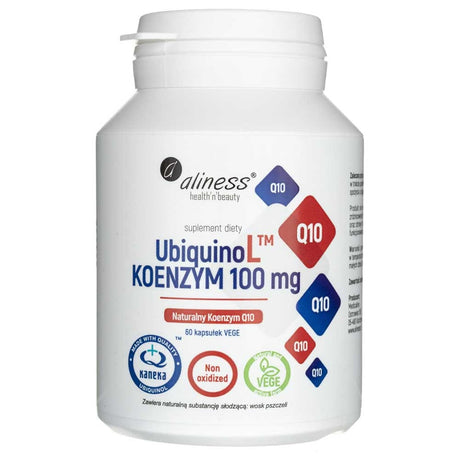


Aliness
Aliness UbiquinoL natural coenzyme Q10 - 60 Veg Capsules
Regular price $45.00Unit price$0.75 each


This article is for information only and does not replace medical advice. If you have health concerns, are pregnant, breastfeeding or taking medication, consult a doctor or pharmacist. Dietary supplements are not a substitute for a varied diet.


